
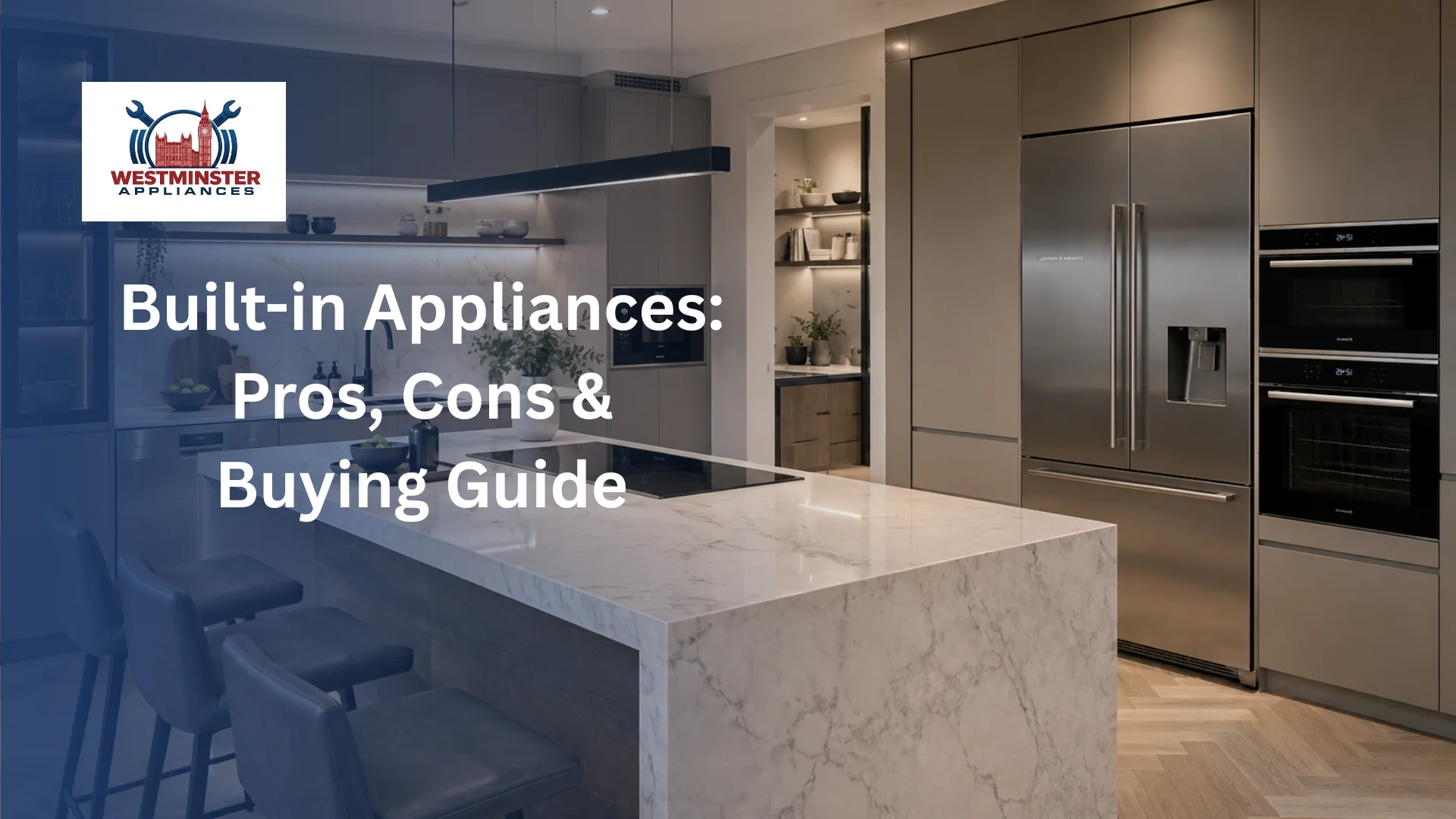
Built-in Appliances: Pros, Cons & Buying Guide
Built-in appliances have become a defining feature of modern kitchens, offering a sleek appearance and efficient use of space. Whether you’re renovating your home or designing a new kitchen from scratch, choosing the right built-in appliances can improve both functionality and aesthetics.
From built-in ovens and integrated fridge freezers to dishwashers and microwaves, these appliances are designed to fit neatly into cabinetry, creating a seamless finish that many homeowners prefer over traditional freestanding models.
In this guide, you’ll learn what built-in appliances are, how they compare with other options, their advantages and disadvantages, typical costs, and what to consider before buying. If you’re planning a kitchen upgrade, you’ll also find practical advice based on real-world installation and ownership experience.
which built-in appliances are right for your home? Visit Westminster Appliances or call us on 020 7459 4459 for expert advice and personalized recommendations.
What Are Built-in Appliances?

Built-in appliances are household appliances specifically designed to be installed inside kitchen cabinets or wall units rather than standing independently. Unlike freestanding models, they become part of the overall kitchen layout and are often selected during a renovation or new kitchen installation.
Common examples include:
- Built-in ovens
- Built-in microwaves
- Built-in dishwashers
- Built-in fridge freezers
- Built-in wine coolers
- Built-in coffee machines
- Built-in hobs
Many homeowners choose built-in kitchen appliances because they create a cleaner, more organized look while making better use of available space.
Why Are Built-in Appliances So Popular?
As modern kitchens have become more stylish and customized, built-in appliances have become a popular choice for homeowners looking for a clean and seamless design.
Some of the biggest reasons include:
- Clean and modern look
- More efficient use of kitchen space
- Better workflow and ease of access
- greater freedom to create layouts
- Co-ordinated finish to suitable cabinetry
For homeowners investing in long-term renovations, built-in appliances often provide a more premium feel than standard freestanding alternatives.
Built-in vs Integrated vs Freestanding Appliances

These terms are often used interchangeably, but they describe different concepts.
| Feature | Built-in Appliances | Integrated Appliances | Freestanding Appliances |
| Installation | Fitted into cabinetry | Hidden behind cabinet doors | Stand alone |
| Visibility | Usually visible | Mostly concealed | Fully visible |
| Flexibility | Moderate | Lower | High |
| Replacement | Requires planning | Can be more complex | Usually straightforward |
| Design | Modern | Minimalist | Traditional |
If you’d like a deeper comparison, see our guide on built-in vs freestanding appliances.
Types of Built-in Appliances
Built-in Ovens
Installed within cabinets or at eye level, built-in ovens offer ergonomic access and integrate neatly into kitchen designs.
Built-in Dishwashers
Designed to sit beneath countertops or behind cabinet panels, they provide a consistent visual appearance while saving space.
Built-in Fridge Freezers
These units fit inside tall cabinets and help create a uniform kitchen finish without sacrificing storage capacity.
Built-in Microwaves
Often installed above ovens or within wall units, built-in microwaves free up valuable countertop space.
Luxury Built-in Appliances
Premium kitchens may also include coffee machines, steam ovens, warming drawers, and wine coolers integrated directly into cabinetry.
Advantages of Built-in Appliances

1. Modern Appearance
One of the biggest reasons people choose built-in appliances is because they make the kitchen look neat, modern, and elegant. Instead of standing out, the appliances fit smoothly into the overall kitchen design.
2. Better Space Optimization
Because built-in appliances are installed inside kitchen cabinets, they save space and make the kitchen look cleaner and more organized.
3. Custom Kitchen Design
Built-in appliances give homeowners and kitchen designers the flexibility to create a kitchen layout that suits their specific needs, cooking habits, and personal style.
4. Enhanced Property Appeal
A well-designed kitchen with high-quality built-in appliances can make your home more appealing to people who are thinking about buying it.
5. Improved Workflow
Installing ovens, microwaves, and dishwashers at a height that’s easy to reach can make everyday tasks like cooking and cleaning more comfortable and convenient.
Disadvantages of Built-in Appliances
Although built-in appliances offer many benefits, there are considerations to keep in mind.
Higher Initial Investment
Purchase prices and installation costs are often higher than for comparable freestanding appliances.
Limited Flexibility
Moving or replacing appliances may require cabinet modifications or careful dimension matching.
Specialist Installation
Electrical, plumbing, and ventilation requirements may require professional expertise to ensure safe installation.
Repair Accessibility
In some cases, technicians need additional time to remove appliances from cabinetry before repairs can begin.
How Much Do Built-in Appliances Cost?
Costs vary depending on the appliance type, brand, and installation requirements.
| Expense | Typical Consideration |
| Appliance purchase | Entry-level to premium pricing |
| Installation | Electrical, plumbing, and fitting work |
| Cabinet adjustments | May be needed for replacement models |
| Long-term ownership | Maintenance, servicing, and repairs |
While built-in appliances generally require a larger upfront investment, many homeowners feel the improved appearance and functionality justify the expense.
Hidden Costs Many Buyers Forget
Before making a purchase, it’s worth considering costs beyond the initial price tag.
- Custom cabinet alterations
- Specialist installation labour
- Replacement compatibility issues
- Future servicing and repairs
- Energy consumption over the appliance’s lifetime
Planning for these expenses can help avoid surprises later and ensure your kitchen project stays within budget.
Choosing the Right Built-in Appliances
When comparing different options, consider:
- Kitchen size and layout
- Household cooking habits
- Available ventilation
- Energy efficiency ratings
- Warranty coverage
- Long-term maintenance requirements
- Availability of replacement parts
Rather than focusing solely on appearance, choose appliances that balance performance, reliability, and practicality.
For expert guidance, installation support, and appliance services, visit Westminster Appliances or call us on 020 7459 4459 for expert advice and personalized recommendations.
Common Problems With Built-in Appliances

Even high-quality built-in appliances can develop faults over time. Based on practical experience in domestic appliance servicing, some of the most common issues include:
Poor Ventilation
Built-in appliances rely on adequate airflow to operate efficiently. Blocked vents or incorrect installation can cause overheating and reduce performance.
Door Alignment Issues
Integrated doors can become misaligned through daily use, making appliances difficult to open or close properly.
Electrical Faults
Loose connections, damaged components, or power supply issues may prevent ovens, microwaves, or dishwashers from functioning correctly.
Water Leaks
Built-in dishwashers and fridge freezers can occasionally develop leaks that affect surrounding cabinetry if left untreated.
Access Challenges During Repairs
Unlike freestanding models, built-in appliances often require partial removal from cabinets before diagnostics or repairs can begin.
How Long Do Built-in Appliances Last?
The lifespan of built-in appliances depends on build quality, maintenance, and frequency of use.
| Appliance | Average Lifespan |
| Built-in Oven | 10–15 years |
| Built-in Dishwasher | 8–12 years |
| Built-in Fridge Freezer | 10–15 years |
| Built-in Microwave | 7–10 years |
| Built-in Washing Machine | 8–12 years |
Regular servicing and prompt repairs can often extend these estimates.
Maintenance Tips to Extend Appliance Lifespan

Routine maintenance can improve performance, reduce energy consumption, and help avoid unexpected breakdowns.
Clean Appliances Regularly
Remove grease, food debris, dust, and lint to prevent unnecessary strain on components.
Keep Ventilation Areas Clear
Built-in appliances need proper airflow. Never block ventilation openings with stored items or insulation.
Check Seals and Hinges
Damaged seals or loose hinges can reduce efficiency and allow heat or moisture to escape.
Follow Manufacturer Guidelines
Always use recommended cleaning products and avoid overloading appliances.
Schedule Preventive Maintenance
Simple inspections can identify small issues before they become expensive repairs.
For a more detailed checklist, read our maintenance guide about:
Maintains Domestic Appliances/
Should You Repair or Replace Built-in Appliances?

One of the biggest question homeowners face is whether to repair an existing appliance or invest in a replacement.
Repair May Be the Better Choice If:
- The appliance is relatively new.
- The repair cost is reasonable.
- Replacement parts are readily available.
- The unit still performs efficiently.
Replacement May Be Worth Considering If:
- Repairs become frequent.
- The appliance has reached the end of its expected lifespan.
- Energy efficiency has declined significantly.
- Major components have failed.
If you’re unsure which option offers better value, our repair vs replace guide can help:
www.repair-vs-replace-appliance/
Best Built-in Appliance Brands
While the ideal brand depends on your budget and requirements, several manufacturers have built strong reputations for quality and reliability.
- Bosch
- Neff
- Siemens
- AEG
- Smeg
- Miele
- Indesit
When choosing among brands, compare warranty terms, energy ratings, service availability, and long-term reliability rather than focusing solely on price.
Are Built-in Appliances Worth It?
For many households, the answer is yes.
Built-in appliances provide:
- A more modern and clean look for the kitchen
- More efficient use of available area
- Flexible design options
- A kitchen that looks well-organized
- Simple to place for cooking and cleaning
However, they also require thoughtful planning, professional installation, and ongoing maintenance. If you’re investing in a long-term kitchen renovation, built-in appliances can deliver excellent value when chosen carefully.
Final Thoughts

Built-in appliances combine functionality with modern design, making them an attractive choice for homeowners who want a streamlined kitchen. By understanding their advantages, limitations, installation requirements, and long-term maintenance needs, you can make an informed decision that suits both your lifestyle and budget.
Whether you’re selecting a built-in oven, fridge freezer, dishwasher, or an entire suite of kitchen appliances, careful planning will help you get the best results.
If you need expert advice, appliance installation, or reliable repair services in London, visit Westminster Appliances at www.westminsterappliances.co.uk/. Our experienced team can help you keep your kitchen running smoothly and assist you in making the right decisions for your home.
Frequently Asked Questions
Q: What are built-in appliances?
Built-in appliances are appliances designed to be permanently installed within kitchen cabinets or dedicated units rather than standing independently.
Q: Are built-in appliances more expensive than freestanding models?
In most cases, yes. Purchase prices and installation costs are typically higher, although many homeowners appreciate the design benefits.
Q: What’s the difference between built-in and integrated appliances?
Built-in appliances are fitted into cabinetry but may remain visible, while integrated appliances are usually concealed behind matching cabinet doors.
Q: Can built-in appliances be replaced easily?
Yes, but replacements often need to match existing cabinet dimensions and installation requirements.
Q: Do built-in appliances require professional installation?
For safety and performance reasons, professional installation is generally recommended, especially for appliances involving electricity, gas, or plumbing.
Q: How can I make my built-in appliances last longer?
Regular cleaning, proper ventilation, routine inspections, and timely repairs all contribute to a longer lifespan.