
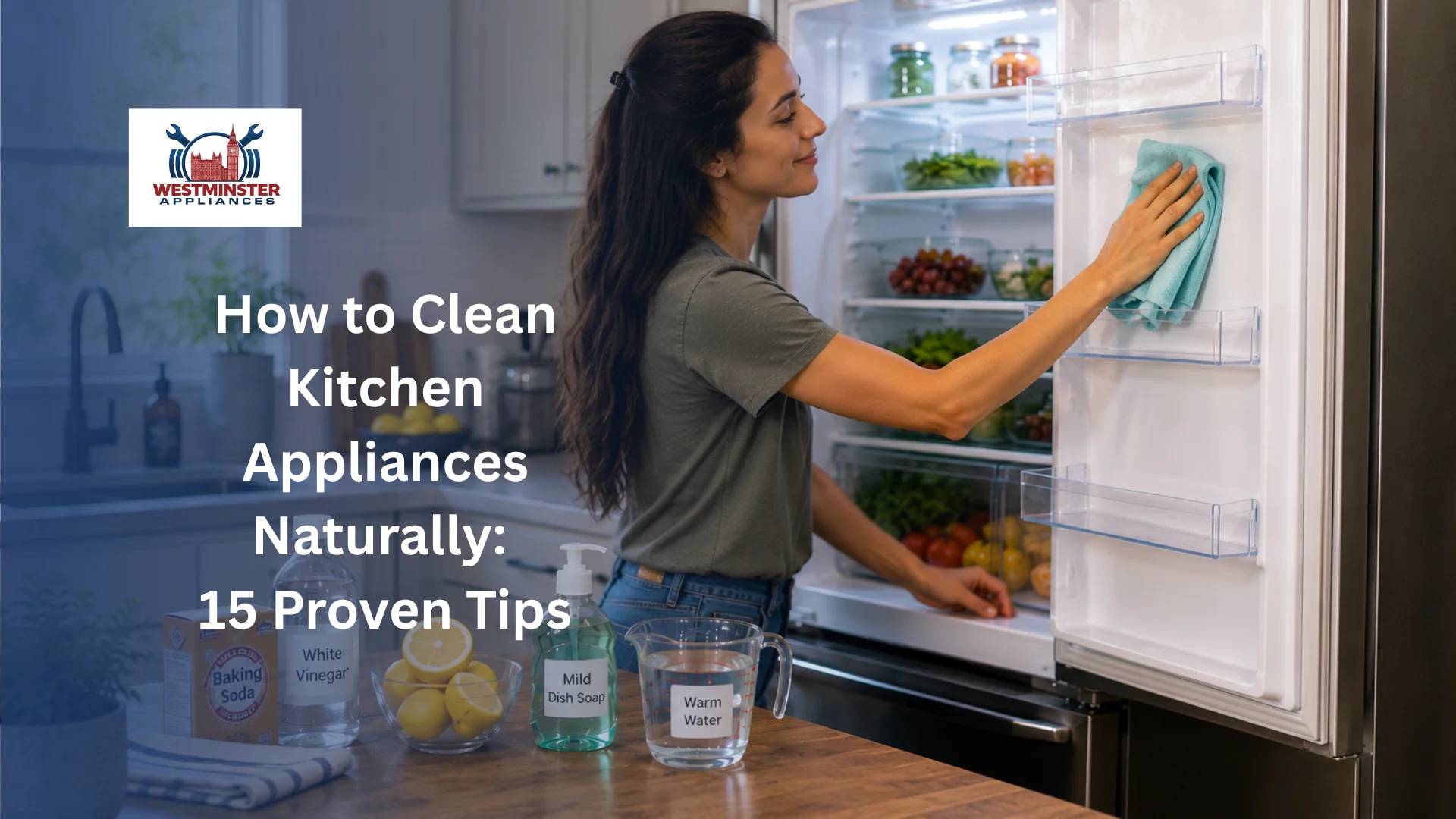
How to Clean Kitchen Appliances Naturally: 15 Proven Tips
Keeping your kitchen clean isn’t just about sparkling countertops—it also means taking proper care of the appliances you rely on every day. Learning how to clean kitchen appliances the right way helps remove grease, food residue, bacteria, and unpleasant odor’s while improving performance and extending the lifespan of your household appliances.
Whether it’s your refrigerator, oven, microwave, dishwasher, air fryer, coffee maker, kettle, blender, or cooker hood, regular cleaning and maintenance can prevent unnecessary wear and keep your kitchen running efficiently.
The good news? You don’t always need expensive commercial cleaners. Many everyday ingredients, such as baking soda, white vinegar, lemon juice, warm water, mild dish soap, and microfiber cloths, can help you clean kitchen appliances safely when used appropriately.
In this complete guide, you’ll discover:
 How to clean kitchen appliances naturally
- Safe cleaning methods for different appliance types
- Common cleaning mistakes to avoid
- Professional appliance maintenance tips
- A practical cleaning schedule
- When cleaning isn’t enough and a repair may be needed
Whether you’re carrying out a weekly kitchen clean or tackling years of built-up grease, this guide will help you clean smarter while protecting your appliances for the long term.
Quick Answer
Most kitchen appliances can be cleaned naturally using baking soda, white vinegar, lemon juice, or mild dish soap — no harsh chemicals needed. But if cleaning doesn’t fix a leak, smell, or performance issue, it may be a mechanical fault.
Why Cleaning Kitchen Appliances Matters
Many homeowners focus on cleaning visible kitchen surfaces but overlook the appliances themselves. Over time, grease, dust, food particles, moisture, and limescale can build up inside and around appliances, affecting both hygiene and performance.
Regular kitchen appliance cleaning offers several benefits beyond keeping your kitchen looking tidy.
Benefits of Cleaning Kitchen Appliances Regularly

- Improves kitchen hygiene
- Removes grease, stains, and food residue
- Helps reduce unpleasant odours
- Improves appliance efficiency
- Helps appliances last longer
- Reduces unnecessary wear and tear
- Makes cooking more hygienic
- Helps identify small problems before they become expensive repairs
Many appliance faults aren’t caused by defective parts—they often develop because dirt, grease, blocked filters, or poor maintenance are left unchecked for long periods.
Natural vs Chemical Appliance Cleaners
One of the biggest questions homeowners ask is whether natural cleaning products work as well as chemical cleaners.
The answer depends on the appliance, the type of dirt you’re removing, and whether you’re following the manufacturer’s care instructions.
Here’s a simple comparison:
| Natural Cleaners | Chemical Cleaners |
| Baking soda | Degreasers |
| White vinegar* | Oven cleaners |
| Lemon juice | Stainless steel sprays |
| Mild dish soap | Descaling chemicals |
| Warm water | Multi-purpose cleaners |
*Important: White vinegar is useful for many cleaning tasks, but it isn’t suitable for every appliance or surface. Always check your appliance manufacturer’s guidance before using acidic cleaners.
For routine maintenance, natural cleaning methods are often enough. However, specialist cleaning products may be recommended for certain appliances or heavy build-up.
Essential Natural Cleaning Supplies

Before you start cleaning, gather a few basic supplies. Most are inexpensive and already found in many homes.
Basic Cleaning Kit
- Baking soda
- White vinegar (where appropriate)
- Lemon juice
- Mild dish soap
- Warm water
- Microfiber cloths
- Soft sponge
- Soft-bristle cleaning brush
- Spray bottle
- Dry towel
These simple items can safely clean many household appliances without relying on harsh chemicals.
Safety Tips Before Cleaning Any Appliance
Before cleaning any electrical appliance, it’s important to take a few basic precautions.
Always:
- Unplug the appliance whenever possible.
- Allow hot appliances to cool completely.
- Read the manufacturer’s cleaning instructions.
- Test any new cleaning solution on a small hidden area first.
- Dry surfaces thoroughly before reconnecting power.
Never:
- Spray water directly onto electrical controls.
- Use steel wool on delicate finishes.
- Mix bleach with vinegar or ammonia.
- Allow excessive moisture to enter electrical components.
- Ignore safety guidance provided by the manufacturer.
Following these simple steps helps protect both your appliances and your safety.
Which Natural Cleaner Works Best?
Different cleaning ingredients work best for different jobs.
| Cleaning Ingredient | Best For |
| Baking soda | Grease, burnt food, stubborn stains |
| White vinegar* | Limescale, light grease, deodorising (where approved) |
| Lemon juice | Freshening surfaces, light grease |
| Mild dish soap | Everyday cleaning |
| Warm water | General wiping and rinsing |
| Microfiber cloth | Dust, fingerprints, polishing |
Choosing the right cleaner helps you remove dirt effectively without damaging appliance surfaces.
Professional Advice Before You Start

As appliance engineers, we’ve seen many appliances that were replaced unnecessarily when a simple clean or routine maintenance would have solved the problem.
For example, we’ve visited homes where refrigerators appeared to have cooling issues, only to discover that dust-covered condenser coils were restricting airflow. After careful cleaning and restoring ventilation, the appliance returned to normal performance without needing replacement parts.
That’s why regular cleaning should always be your first step before assuming an appliance has developed a major fault.
However, if your appliance continues leaking, making unusual noises, overheating, or not performing correctly after cleaning, it may require professional attention.
If that happens, our experienced engineers at Westminster Appliances provide trusted Appliance Repair Westminster services across Westminster and surrounding London areas. You can learn more or book a repair at:
Not sure if it’s dirt or a real fault? Send us a photo on WhatsApp & get a quote in minutes
Understanding Natural Cleaning Ingredients
Before you start cleaning your appliances, it’s helpful to understand how different natural cleaning ingredients work. While baking soda, vinegar, lemon juice, and dish soap are all popular household cleaners, each one is better suited to specific cleaning tasks.
Using the right cleaner for the right job not only produces better results but also helps protect delicate appliance surfaces from unnecessary damage.
Baking Soda – Best for Grease and Burnt Food
Baking soda is one of the safest natural cleaners for many kitchen appliances. Its mild abrasive texture helps lift stubborn grease and food residue without being overly harsh on most surfaces.
Best Uses
- Oven interiors
- Oven racks
- Air fryer baskets
- Microwave stains
- Refrigerator shelves
- Tough food residue
Benefits
- Removes burnt-on grease
- Neutralises unpleasant odours
- Gentle on many appliance surfaces
- Affordable and widely available
Avoid
Although baking soda is mild, avoid excessive scrubbing on delicate glass or glossy finishes.
White Vinegar – Best for Limescale and Odours
White vinegar is well known for breaking down mineral deposits and helping remove unpleasant smells. However, many people assume it is suitable for every appliance—which isn’t true.
Best Uses
- Kettles (where manufacturer guidance permits)
- Coffee makers (if approved)
- Dishwasher maintenance
- Removing light grease
- Deodorising
Benefits
- Dissolves limescale
- Freshens appliances
- Cuts through light grease
- Inexpensive and eco-friendly
 Important
Do not assume vinegar is safe for every appliance or surface. Some manufacturers advise against using acidic cleaners on certain finishes, rubber components, or internal parts. Always check your appliance manual first.
Lemon Juice – Best for Freshening and Light Cleaning
Lemon juice contains natural citric acid, making it useful for tackling light grease while leaving a fresh citrus scent.
Many homeowners use it when cleaning microwaves because the steam helps soften dried food residue.
Best Uses
- Microwave cleaning
- Light grease removal
- Freshening appliance interiors
- Removing mild stains
Benefits
- Pleasant natural fragrance
- Helps loosen food residue
- Easy to use
- Readily available
Mild Dish Soap – The Everyday Cleaning Hero
If there’s one cleaner that’s suitable for most appliances, it’s a mild dish soap mixed with warm water.
Unlike harsh chemical cleaners, it removes grease effectively without being overly aggressive on many finishes.
Best Uses
- Refrigerator shelves
- Freezer drawers
- Blender jars
- Air fryer baskets
- Appliance exteriors
- Cooker hoods
Benefits
- Safe for routine cleaning
- Removes grease effectively
- Easy to rinse away
- Suitable for many household appliances
Microfiber Cloths – Your Secret Cleaning Weapon
Many people spend money on expensive cleaners but overlook one of the most effective cleaning tools—a microfiber cloth.
Unlike ordinary cloths or paper towels, microfiber traps dust, grease, and fingerprints without scratching many common appliance surfaces.
Ideal For
- Stainless steel appliances
- Refrigerator doors
- Oven doors
- Microwave interiors
- Control panels
- Glossy finishes
Engineer Tip
Always keep two microfiber cloths:
- One slightly damp for cleaning
- One completely dry for buffing and removing streaks
Which Natural Cleaner Is Best for Each Appliance?
Choosing the correct cleaner can make your job much easier while protecting your appliances.
| Appliance | Recommended Natural Cleaner | Avoid |
| Refrigerator | Mild dish soap + warm water | Abrasive pads |
| Freezer | Baking soda solution | Excessive water |
| Oven | Baking soda paste | Steel wool |
| Microwave | Lemon steam or mild dish soap | Harsh oven cleaners |
| Dishwasher | Mild cleaner + filter cleaning | Excess detergent |
| Air Fryer | Warm soapy water | Immersing electrical base |
| Blender | Warm water + dish soap | Abrasive brushes |
| Coffee Maker | Manufacturer-approved descaling method | Random homemade mixtures |
| Electric Kettle | Approved descaling solution | Metal scourers |
| Toaster | Dry crumb removal + damp cloth | Water inside appliance |
| Cooker Hood | Warm soapy water | Abrasive chemicals |
| Stainless Steel | Mild dish soap + microfiber cloth | Bleach or rough scrubbers |
 Pro Tip: Always follow the care instructions supplied with your appliance. Different manufacturers may recommend different cleaning methods for specific models.
Natural Cleaners vs Harsh Chemicals
Many people believe stronger chemicals automatically clean better, but that’s not always true.
For everyday kitchen maintenance, natural cleaning methods are often enough to remove grease, fingerprints, food residue, and everyday dirt.
| Natural Cleaning | Chemical Cleaning |
| Gentle on many surfaces | Can be aggressive |
| Affordable | Often more expensive |
| Environmentally friendly | May contain strong chemicals |
| Suitable for routine maintenance | Better suited for specific heavy-duty tasks |
| Pleasant natural smell | Strong chemical odours |
The best approach isn’t choosing one over the other—it’s using the right product for the right situation.
Common Questions Before You Start Cleaning
Before deep cleaning your appliances, there are a few important questions worth asking.
Q: Should you unplug appliances?
Yes, whenever it’s safe and practical. Disconnecting power reduces the risk of electrical accidents during cleaning.
Q: Should you use lots of water?
No.
Excess water can damage electrical components, especially around control panels and ventilation openings.
Q: Should every appliance be cleaned the same way?
Definitely not.
A refrigerator, oven, induction hob, air fryer, and coffee machine all have different materials and cleaning requirements.
Q: Is natural always safer?
Not necessarily.
Natural ingredients can still damage certain finishes if used incorrectly. Always check your appliance manufacturer’s recommendations before trying a new cleaning method.
Trusted Cleaning Advice from Industry Experts
When researching this guide, we reviewed advice from appliance manufacturers, independent consumer organisations, and real homeowner experiences.
For example:
- The Food Standards Agency (FSA) recommends maintaining clean food preparation areas to support food hygiene.
- Which? regularly advises homeowners to keep kitchen appliances clean and well maintained to help them perform efficiently.
- Many appliance manufacturers also recommend following model-specific cleaning instructions rather than relying solely on internet cleaning hacks.
These expert recommendations reinforce a simple principle:
Routine cleaning, correct maintenance, and using the right cleaning products are often the easiest ways to help appliances perform at their best.
Before We Start Cleaning…
Now that you know:
- Which cleaner works best
- Which mistakes to avoid
- How to clean safely
- Which products are suitable for different appliances
it’s time to look at the practical side of the job.
In the next section, we’ll walk through 15 safe and proven ways to clean kitchen appliances naturally, including refrigerators, ovens, microwaves, dishwashers, kettles, air fryers, coffee makers, blenders, cooker hoods, and more, with step-by-step instructions and professional maintenance tips.
 Helpful Guides Before You Continue
If you’re looking after your appliances beyond regular cleaning, these guides may also help:
 Appliances Overheating? Causes & Fixes
 - Repair or Replace an Appliance?
- Complete Appliance Repair Services
If regular cleaning doesn’t resolve a problem, the experienced team at Westminster Appliances can help with professional diagnosis, repairs, and maintenance across Westminster and surrounding London areas.
15 Proven Ways to Clean Kitchen Appliances Naturally
Now that you know which cleaning ingredients work best, let’s look at how to clean kitchen appliances safely and effectively.
These methods use simple household ingredients wherever appropriate and follow general appliance care recommendations. Always refer to your appliance manufacturer’s instructions before using any cleaning method.
1. How to Clean a Refrigerator Naturally

The refrigerator stores your food every day, making it one of the most important appliances to keep clean. Spilled liquids, forgotten leftovers, and food residue can quickly lead to unpleasant odours and bacteria.
You’ll Need
- Mild dish soap
- Warm water
- Microfiber cloth
- Soft sponge
- Baking soda (optional for stubborn stains)
Steps
- Unplug the refrigerator if practical.
- Remove all food items.
- Take out removable shelves and drawers.
- Wash them with warm soapy water.
- Wipe the interior walls.
- Dry everything thoroughly before replacing shelves and food.
Engineer Tip
Don’t forget to wipe the rubber door seals. Dirt trapped here can reduce the door’s ability to seal properly.
If your refrigerator is leaking water instead of simply being dirty, read our complete guide:
Why Is My Fridge Leaking Water?
2. How to Clean a Freezer
Ice build-up and food spills can reduce storage space and affect efficiency.
Steps
- Empty the freezer.
- Allow any ice to melt naturally if manual defrosting is required.
- Wipe all surfaces with warm soapy water.
- Dry completely before restarting.
Never use sharp objects to remove ice, as they can damage internal components.
3. How to Clean an Oven Naturally

Ovens collect baked-on grease, food spills, and burnt residue over time.
Natural Method
Mix baking soda with a small amount of water to form a thick paste.
- Apply the paste to greasy areas.
- Leave it for several hours or overnight.
- Wipe away with a damp microfiber cloth.
- Remove remaining residue with warm water.
Avoid
- Steel wool
- Sharp scrapers
- Excessive water near heating elements
4. How to Clean a Microwave Naturally

A microwave is one of the easiest appliances to clean naturally.
Lemon Steam Method
- Fill a microwave-safe bowl with water.
- Add a few lemon slices.
- Heat for around five minutes.
- Leave the door closed for another five minutes.
- Wipe away softened food residue.
This method helps loosen dried food while leaving a fresh smell.
5. How to Clean a Dishwasher
Many people clean their dishes but forget to clean the dishwasher itself.
Areas to Clean
- Filter
- Door seals
- Spray arms
- Interior walls
Blocked filters can reduce washing performance and cause unpleasant smells.
Engineer recommendation:
Check and rinse the dishwasher filter every month.
6. How to Clean an Air Fryer

Air fryers accumulate grease surprisingly quickly.
Steps
- Unplug and cool completely.
- Remove basket and tray.
- Wash with warm soapy water.
- Wipe the interior with a damp microfiber cloth.
- Dry completely before reassembling.
Avoid immersing the electrical base in water.
7. How to Clean a Coffee Maker
Mineral deposits naturally build up inside coffee machines over time.
Follow the manufacturer’s recommended descaling procedure rather than relying on random internet cleaning hacks.
Regular descaling helps maintain brewing performance and flavor.
8. How to Clean an Electric Kettle
Limescale is one of the biggest causes of reduced kettle performance.
If your manufacturer approves vinegar-based descaling:
- Fill with equal parts water and white vinegar.
- Allow the solution to work.
- Rinse thoroughly several times before boiling fresh water.
Always follow the appliance manual.
9. How to Clean a Blender

Cleaning a blender immediately after use prevents stubborn food residue.
Quick Method
- Add warm water.
- Add a drop of dish soap.
- Blend for 20–30 seconds.
- Rinse thoroughly.
- Dry before storing.
10. How to Clean a Toaster
Toasters collect crumbs that many homeowners never remove.
Safe Cleaning Steps
- Unplug first.
- Empty the crumb tray.
- Shake loose crumbs carefully.
- Wipe the exterior.
Never insert knives or metal objects inside the toaster.
11. How to Clean a Cooker Hood Filter

Grease naturally builds up inside cooker hood filters.
Steps
- Remove the filter.
- Soak in warm water with dish soap.
- Gently scrub with a soft brush.
- Rinse.
- Dry completely before reinstalling.
Cleaning filters regularly helps maintain good airflow.
12. How to Clean an Induction or Ceramic Hob
Glass cooking surfaces require gentle cleaning.
Use:
- Soft microfiber cloth
- Mild dish soap
- Warm water
Avoid:
- Steel wool
- Abrasive powders
- Sharp metal scrapers
13. How to Clean Stainless Steel Appliances
Fingerprints are one of the biggest frustrations with stainless steel finishes.
Best Method
- Wipe with warm soapy water.
- Dry immediately.
- Buff using a clean microfiber cloth.
Always wipe in the direction of the grain where visible.
14. Clean Behind and Under Appliances
One of the most overlooked cleaning tasks is behind large appliances.
Dust, grease, pet hair, and food crumbs can accumulate behind refrigerators and cookers, restricting airflow and creating hygiene issues.
If it’s safe to do so:
- Move the appliance carefully.
- Vacuum dust.
- Wipe the floor.
- Return the appliance gently.
If you notice your refrigerator struggling to stay cool during hot weather, cleaning behind it can help improve airflow. You may also find this guide useful:
Why Is My Fridge Not Cooling in Hot Weather?
15. Clean Appliance Exteriors Every Week
Many people deep clean appliance interiors but forget the outside.
Weekly cleaning helps remove:
- Fingerprints
- Dust
- Cooking grease
- Food splashes
Simply wipe surfaces using warm water, mild dish soap, and a microfiber cloth.
It’s one of the easiest ways to keep your kitchen looking fresh.
Quick Reference Cleaning Table
| Appliance | Recommended Cleaner | Cleaning Frequency |
| Refrigerator | Mild dish soap | Weekly |
| Freezer | Warm soapy water | Monthly |
| Oven | Baking soda paste | Monthly |
| Microwave | Lemon steam | Weekly |
| Dishwasher | Mild cleaner + filter | Monthly |
| Air Fryer | Warm soapy water | After use |
| Coffee Maker | Approved descaler | Monthly |
| Kettle | Approved descaler | Monthly |
| Blender | Dish soap + warm water | After use |
| Toaster | Empty crumb tray | Weekly |
| Cooker Hood | Warm soapy water | Monthly |
| Hob | Mild dish soap | After cooking |
Cleaning Solves Many Problems—But Not Every Problem
Regular cleaning is one of the best ways to improve appliance performance, but it won’t fix every issue.
If your appliance continues:
- leaking water,
- making unusual noises,
- overheating,
- failing to cool,
- or not working correctly,
the problem may require professional diagnosis rather than additional cleaning.
At Westminster Appliances, our experienced engineers provide trusted appliance repair services throughout Westminster and surrounding London areas.
Learn more:
Need urgent help?
How Often Should You Clean Kitchen Appliances?
One of the most frequently asked questions is, “How often should I clean my kitchen appliances?”
The answer depends on how often you use them. Some appliances, such as microwaves and air fryers, benefit from frequent cleaning, while others only require a thorough deep clean every few weeks or months.
Following a simple maintenance routine keeps your kitchen hygienic, helps appliances perform efficiently, and may reduce the risk of avoidable repairs.
Recommended Kitchen Appliance Cleaning Schedule
| Appliance | Quick Clean | Deep Clean | Maintenance Check |
| Refrigerator | Weekly | Monthly | Every 6 Months |
| Freezer | Monthly | Every 3–6 Months | Every 6 Months |
| Oven | After Heavy Use | Every 1–2 Months | Every 6 Months |
| Microwave | Weekly | Monthly | Every 6 Months |
| Dishwasher | Weekly | Monthly | Monthly (Filter) |
| Air Fryer | After Every Use | Weekly | Monthly |
| Coffee Maker | Weekly | Monthly | Every 3 Months |
| Electric Kettle | Weekly | Every 1–2 Months | Every 3 Months |
| Blender | After Every Use | Weekly | Monthly |
| Toaster | Weekly | Monthly | Monthly |
| Cooker Hood | Monthly | Every 2–3 Months | Every 3 Months |
| Hob | After Every Use | Weekly | Monthly |
Expert Tip: Spending just 10–15 minutes each week cleaning your appliances is far easier than dealing with years of built-up grease and stubborn food residue.
Cleaning Behind and Under Appliances Safely
One of the most common maintenance mistakes homeowners make is overlooking the areas behind and underneath their large kitchen appliances.
Over time, these hidden areas collect:
- Dust
- Pet hair
- Food crumbs
- Grease
- Moisture
- Cobwebs
This build-up can restrict airflow around appliances such as refrigerators, making them work harder than necessary.
How to Clean Behind Appliances
Refrigerator
- Remove food items if you need to make the appliance lighter.
- Check whether your fridge has wheels.
- Carefully pull it forward.
- Vacuum dust from behind the appliance.
- Wipe the floor.
- Return the appliance gently.
Cooker
If your cooker has a removable storage drawer underneath:
- Remove the drawer.
- Vacuum loose crumbs.
- Clean underneath using warm soapy water.
- Dry thoroughly before replacing the drawer.
Dishwasher
Only pull the appliance forward if the hoses and electrical connections allow safe movement.
Never force heavy appliances away from the wall.
Common Cleaning Mistakes That Can Damage Appliances
Cleaning your appliances is beneficial—but using the wrong techniques can shorten their lifespan.
Here are the most common mistakes our engineers come across.
 Using Steel Wool or Abrasive Pads
Although they remove stubborn dirt quickly, they can permanently scratch:
- Stainless steel
- Glass oven doors
- Ceramic hobs
- Appliance coatings
Use a microfiber cloth or soft sponge instead.
Spraying Cleaner Directly onto Controls
Liquids can seep behind buttons and electronic touch panels.
Instead:
Spray your cloth—not the appliance.
Ignoring Filters
Many homeowners never clean:
- Dishwasher filters
- Cooker hood filters
- Refrigerator vents
Blocked filters reduce performance and may increase energy consumption.
Using Too Much Water
Excess moisture can enter electrical components and create unnecessary problems.
Always use a damp—not soaking wet—cloth.
Forgetting Door Seals
Dirty refrigerator door seals reduce efficiency and allow warm air inside.
Wipe them regularly using warm water and mild dish soap.
Waiting Until Appliances Look Dirty
Many problems begin long before visible dirt appears.
Routine maintenance is always easier than emergency cleaning.
Kitchen Cleaning Myths You Should Stop Believing
The internet is full of cleaning advice—but not all of it is accurate.
Let’s separate myths from facts.
Myth: Vinegar Cleans Everything
False.
Although white vinegar is excellent for removing limescale, it isn’t suitable for every appliance or surface.
Always follow manufacturer recommendations.
Myth: More Cleaner Means Better Results
False.
Using too much cleaning product often leaves residue that attracts more dirt.
Myth: Bleach Is Safe for Every Appliance
False.
Bleach should never be mixed with vinegar or ammonia and isn’t appropriate for many appliance surfaces.
Myth: Natural Cleaners Can Never Cause Damage
False.
Natural ingredients still need to be used correctly.
Even lemon juice and vinegar contain natural acids that may affect certain finishes.
Myth: Appliances Only Need Cleaning When They Smell
False.
Dust, grease, bacteria, and food residue often accumulate long before unpleasant odours appear.
H2: Professional Appliance Maintenance Tips
After repairing and servicing household appliances across Westminster, we’ve noticed one simple pattern:
Well-maintained appliances generally perform better and often last longer.
Although regular cleaning won’t prevent every fault, it can help reduce unnecessary strain on many components.
Here are some practical habits we recommend:
Clean Spills Immediately
Fresh food residue is much easier to remove than burnt-on grease.
Don’t Ignore Small Warning Signs
If your appliance develops:
- unusual noises,
- burning smells,
- poor cooling,
- slow drainage,
- excessive heat,
investigate the issue early rather than waiting for complete failure.
For example, if your appliance feels unusually hot, our guide below explains the possible causes:
Appliances Overheating: Causes, Risks & Solutions
Keep Ventilation Areas Clear
Refrigerators, freezers and some built-in appliances rely on good airflow.
Avoid pushing appliances tightly against walls.
Inspect Door Seals
Damaged seals allow warm air to enter refrigerators and freezers, increasing energy use.
Follow Manufacturer Recommendations
Every appliance is slightly different.
Following the care instructions supplied with your appliance is always the safest approach.
When Cleaning Isn’t Enough
Sometimes even the best cleaning routine can’t solve an appliance problem.
If your appliance continues to:
- Leak water
- Make loud noises
- Overheat
- Stop cooling properly
- Fail to heat evenly
- Trip your electrics
- Produce burning smells
it may require professional diagnosis.
Our experienced engineers at Westminster Appliances provide reliable support for homeowners, landlords, and property managers across Westminster and surrounding London areas.
Whether you need a routine repair or urgent assistance, we can help with:
- Appliance Repair Westminster
- Emergency Appliance Repair London
- Appliance Installation Westminster
- Built-in Appliance Supply
- Appliance Support for Landlords
If you’re unsure whether repairing or replacing your appliance is the better option, our detailed guide can help you make an informed decision:
Repair vs Replace an Appliance
Looking After Your Appliances All Year Round
Cleaning is just one part of good appliance care.
To keep your household appliances in excellent condition throughout the year, it’s worth combining regular cleaning with routine maintenance and early fault detection.
You may also find these expert guides helpful:
- Best Ways to Maintain Domestic Appliances at Home
- Fridge Freezer Repair Guide: 10 Common Problems & Fixes
- Washing Machine Repair: 10 Common Issues & Solutions
- Built-in vs Freestanding Appliances: Which Is Better?
Regular maintenance not only helps keep appliances cleaner but can also improve efficiency, reduce running costs, and minimise the likelihood of unexpected breakdowns.
Appliances Not Performing Like They Should?
Final Thoughts

Learning how to clean kitchen appliances properly is one of the easiest ways to keep your kitchen hygienic, improve appliance performance, and help your household appliances last longer.
With simple household items such as baking soda, white vinegar (where appropriate), lemon juice, mild dish soap, warm water, and microfiber cloths, you can safely remove grease, food residue, fingerprints, and unpleasant odours from many everyday appliances.
However, cleaning is only one part of good appliance care.
Regular maintenance, keeping filters clean, checking door seals, ensuring proper ventilation, and following the manufacturer’s instructions all play an important role in protecting your appliances and reducing the risk of unexpected breakdowns.
If regular cleaning doesn’t solve the problem, don’t ignore the warning signs. Persistent leaks, unusual noises, overheating, or poor performance may indicate a mechanical fault that requires professional attention.
At Westminster Appliances, we help homeowners, landlords, and property managers across Westminster and surrounding London areas with:
- Appliance Repairs
- Emergency Appliance Repairs
- Appliance Installation
- Built-in Appliance Supply
- Appliance Support for Landlords
Whether you need expert advice or professional repairs, our experienced engineers are here to help.
Continue Learning with Our Expert Guides
Want to learn more about appliance care and maintenance? These guides may help:
Kitchen & Refrigeration
- Why Is My Fridge Leaking Water? Causes & Fixes
- Why Is My Fridge Not Cooling in Hot Weather? 7 Fixes
- Fridge Freezer Repair Guide: 10 Common Problems & Fixes
Laundry Appliances
- Washing Machine Making Loud Noise? 9 Causes & Fixes
- Washing Machine Repair: 10 Common Issues & Solutions
Appliance Care & Buying Advice
- Best Ways to Maintain Domestic Appliances at Home
- Built-in vs Freestanding Appliances: Which Is Better?
- Repair vs Replace an Appliance?
- Same-Day Appliance Repair: What to Expect
- Complete Appliance Repair Services
These expert guides cover common appliance problems, maintenance advice, repair tips, and practical solutions to help you keep your household appliances working at their best.
 Found This Guide Helpful?
If this article helped you solve a problem or taught you something new, we’re delighted it made a difference.
And if you’ve also used Westminster Appliances for an appliance repair or installation, we’d really appreciate it if you could share your experience by leaving us a Google review. Your feedback helps other homeowners find a trusted local appliance repair company.
Thank you for your support!
 Follow Westminster Appliances on Instagram
Want more practical appliance care tips?
We regularly share:
- Appliance cleaning hacks
- Seasonal maintenance reminders
- Before-and-after repair photos
- Real repair stories
- Kitchen appliance care guides
- New appliance arrivals
- Helpful homeowner tips
Follow us for fresh content and expert advice:
Frequently Asked Questions
Q: Is it safe to clean kitchen appliances with vinegar?
Yes, white vinegar can be an effective natural cleaner for removing limescale, light grease, and unpleasant odours. However, it is not suitable for every appliance or surface. Some manufacturers advise against using acidic cleaners on certain finishes, rubber seals, or internal components. Always check your appliance manual before using vinegar.
Q: Can baking soda scratch kitchen appliances?
Baking soda is a mild abrasive and is generally safe for many household appliances when used with a soft sponge or microfiber cloth. Avoid excessive scrubbing on delicate finishes, polished surfaces, or glass.
Q: What is the best natural cleaner for kitchen appliances?
There isn’t a single cleaner that’s perfect for every appliance. In most homes:
- Mild dish soap works well for everyday cleaning.
- Baking soda is excellent for grease and burnt food.
- White vinegar helps remove limescale where approved.
- Lemon juice freshens surfaces and loosens light grease.
- Warm water and a microfiber cloth are ideal for routine maintenance.
Using the right cleaner for the right appliance is more important than relying on one solution for everything.
Q: How often should I clean my kitchen appliances?
This depends on how often you use them.
As a general guide:
- Refrigerators – Weekly
- Microwaves – Weekly
- Air fryers – After every use
- Ovens – Monthly
- Dishwashers – Monthly
- Kettles – Monthly
- Coffee makers – Monthly
Regular cleaning prevents grease build-up, food residue, and unpleasant odours while helping appliances perform efficiently.
Q: Can natural cleaners replace chemical cleaners?
For routine maintenance, natural cleaning methods are often enough. However, heavily burnt grease, stubborn carbon deposits, or manufacturer-specific maintenance may require specialist cleaning products.
Always follow your appliance manufacturer’s recommendations.
Q: Should I clean behind my refrigerator?
Yes.
Dust and dirt behind a refrigerator can restrict airflow around the condenser, forcing the appliance to work harder than necessary. Cleaning behind the fridge every few months helps maintain good ventilation and may improve efficiency.
If your fridge still struggles to cool properly after cleaning, read our guide:
Why Is My Fridge Not Cooling in Hot Weather?
Q: What’s the safest cloth to use on kitchen appliances?
A microfiber cloth is one of the safest choices for most appliances. It removes grease, fingerprints, and dust without scratching many common finishes.
Q: Why do my appliances still smell after cleaning?
Persistent odours may be caused by:
- Hidden food debris
- Blocked filters
- Standing water
- Mould
- Drainage issues
- Internal mechanical faults
If unpleasant smells remain after a thorough clean, it may be time for a professional inspection.
Q: When should I call a professional appliance engineer?
Cleaning can solve many common problems, but you should seek professional help if your appliance:
- Leaks water
- Produces burning smells
- Makes unusual noises
- Stops heating or cooling correctly
- Frequently trips the electrics
- Stops working completely
Our experienced engineers at Westminster Appliances provide professional appliance repair services across Westminster and surrounding London areas.