
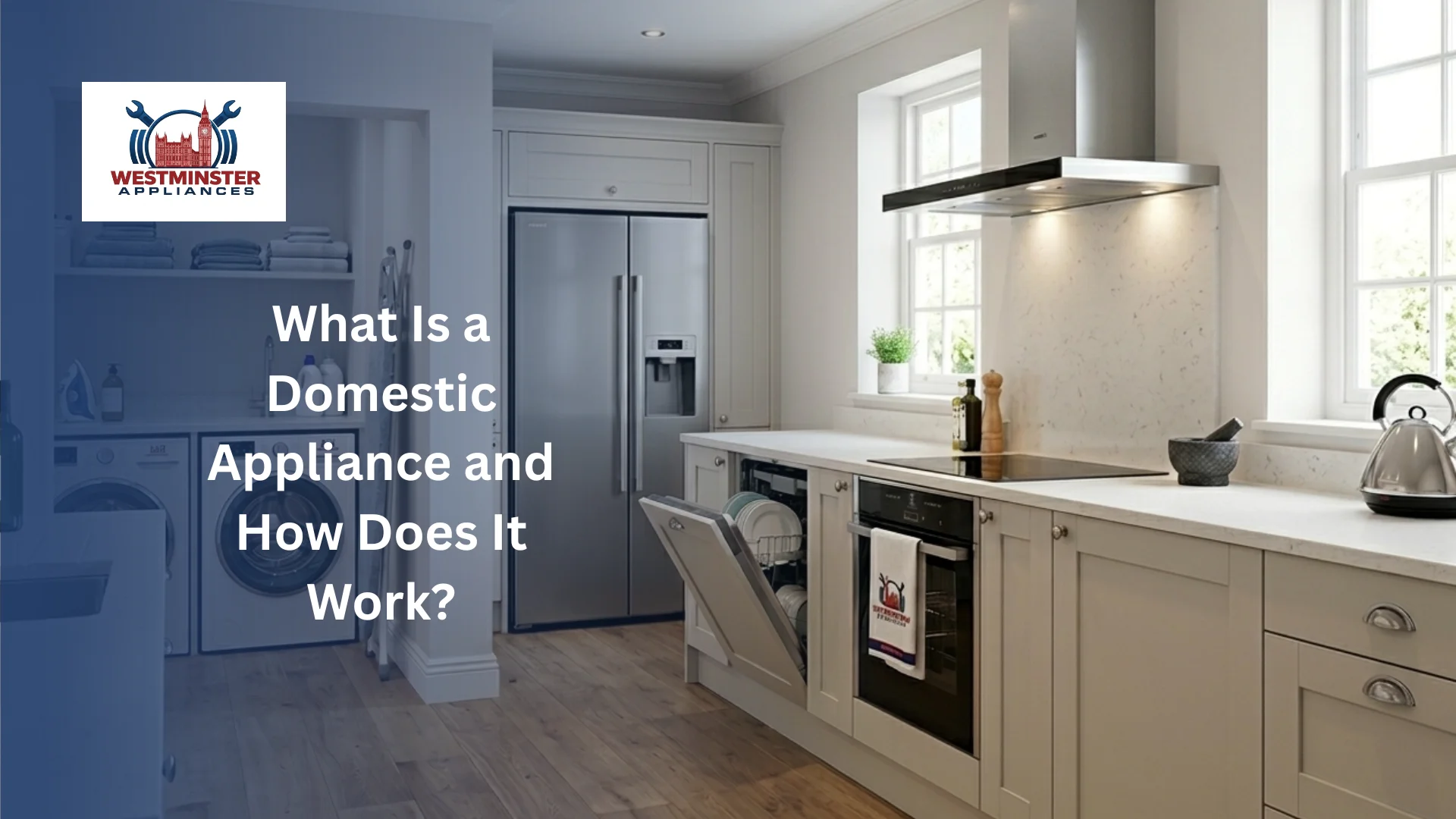
What Is a Domestic Appliance and How Does It Work?
A domestic appliance is a very important feature of the modern living. A domestic appliance handles everyday tasks around the house and makes the home more effective, from washing clothes to keeping food.
A household appliance (sometimes called a home appliance or household appliance) is an electrical equipment that is used in the home to accomplish a certain task. Simple examples include cooking, cleaning, heating, cooling or preservation of food.
Today, almost every family has at least one domestic appliance, such as a washing machine, fridge freezer or electric oven. These technologies are no longer a luxury – they are necessary infrastructure for modern life.
Types of Domestic Appliance
Understanding the many types of domestic appliances can assist you in finding the best solution for your home.
| Category | Domestic Appliance Examples | Purpose / Function | Common Use in Home |
| Kitchen Appliances | Electric oven, microwave, dishwasher, cooker, toaster | Cooking, heating, and food preparation | Meal preparation and kitchen tasks |
| Laundry Appliances | Washing machine, tumble dryer, washer-dryer | Cleaning and drying clothes | Laundry and fabric care |
| Cooling Appliances | Fridge freezer, refrigerator, freezer | Food preservation and cooling | Food storage and freshness maintenance |
| Small Domestic Appliances | Vacuum cleaner, iron, coffee machine, blender | Cleaning and small daily tasks | Household cleaning and convenience |
| Built-in Appliances | Built-in oven, integrated dishwasher, fitted fridge freezer | Space-saving kitchen integration | Modern kitchen design and installation |
| Freestanding Appliances | Freestanding washing machine, standalone cooker, portable fridge | Flexible placement and mobility | Easy installation and replacement |
How a household Appliance Works
A household appliance works by converting electrical energy into useful household functions.
Basic Working Principle
Most household appliances follow this process:
| Step | Function |
| 1 | Electrical power supply |
| 2 | Activation of internal system |
| 3 | Conversion into heat/motion/cooling |
| 4 | Completion of household task |
Internal Components of a household Appliance
- Electric motors
- Heating elements
- Sensors
- Control boards
- Thermostats
According to research from ScienceDirect, modern appliances rely heavily on automation and energy-efficient electrical systems to improve performance and reduce energy consumption.
Built-in vs Freestanding Domestic Appliances

Choosing between built-in and freestanding domestic appliances is important for kitchen planning.
Built-in Appliances
- Integrated into kitchen units
- Space-saving design
- Modern appearance
Freestanding Appliances
- Easy to move and replace
- Flexible placement
- Lower installation complexity
Comparison Table
| Feature | Built-in | Freestanding |
| Design | Integrated | Standalone |
| Flexibility | Low | High |
| Installation | Complex | Simple |
| Cost | Higher | Lower |
Why Domestic Appliance Efficiency Matters
Modern domestic appliances are designed to improve energy efficiency and reduce household costs.
Key Benefits
- Lower electricity usage
- Faster task completion
- Reduced manual labour
- Improved home productivity
Energy efficiency standards in appliances are also regulated in many countries to reduce environmental impact.
Real-Life Importance of household Appliances
A household appliance plays a major role in daily household routines.

Example Scenario:
A washing machine saves several hours per week compared to manual washing, allowing families to focus on work, education, and rest.
This is why modern homes rely heavily on household appliances for convenience and efficiency.
Installation and Maintenance Importance
Proper installation is critical for the performance of any household appliance.

⚠️ Why Installation Matters
- Ensures safety
- Improves efficiency
- Reduces breakdown risks
- Extends appliance lifespan
If installation is incorrect, appliances may fail early or consume more energy than expected.
👉 For professional support, you can explore services at Westminster Appliances
Common Problems in Domestic Appliances
Even the best household appliance can face issues over time.
- Heating failure in ovens
- Water drainage issues in washing machines
- Cooling problems in fridge freezers
- Electrical faults
- Motor wear and tear
Repair vs Replacement Decision
When a household appliance breaks down, deciding between repair and replacement depends on its age, condition, and repair cost. Minor issues are usually worth repairing, especially for newer appliances, while older or frequently failing units are often better replaced with more energy-efficient models.
If you’re unsure whether to repair or replace your appliance, you can read our detailed guide here: Repair vs Replace Appliance Guide
A simple rule: if the repair cost is more than half the price of a new appliance, replacement is usually the better option.
Modern Trends in household Appliances
Today’s household appliances are evolving rapidly.
Smart Features Include:
- Wi-Fi connectivity
- App control systems
- Energy monitoring
- Automated cleaning modes
These innovations are shaping the future of household living.
EEAT TRUST ELEMENT
This guide is based on real-world experience with household appliances, including common household issues, installation practices, and repair scenarios. Modern domestic appliances require both technical understanding and practical knowledge to maintain properly. The information shared here is designed to help homeowners make informed decisions with confidence.
FINAL THOUGHT
A domestic appliance is not simply a household machine, but an important part of modern lifestyles that enhances comfort, saves time and boosts efficiency.
All household appliances are a key part of today’s houses whether it’s cooking, cleaning or chilling.
FAQs
What is a domestic appliance?
A domestic appliance is an electrical device used in homes to perform household tasks such as cooking, cleaning, and cooling.
What are examples of household appliances?
Examples include washing machines, ovens, fridge freezers, dishwashers, and microwaves.
What is the difference between built-in and freestanding appliances?
Built-in appliances are installed into kitchen units, while freestanding appliances can be moved and placed anywhere.
Are household appliances energy efficient?
Yes, modern household appliances are designed to reduce energy consumption and improve efficiency.